
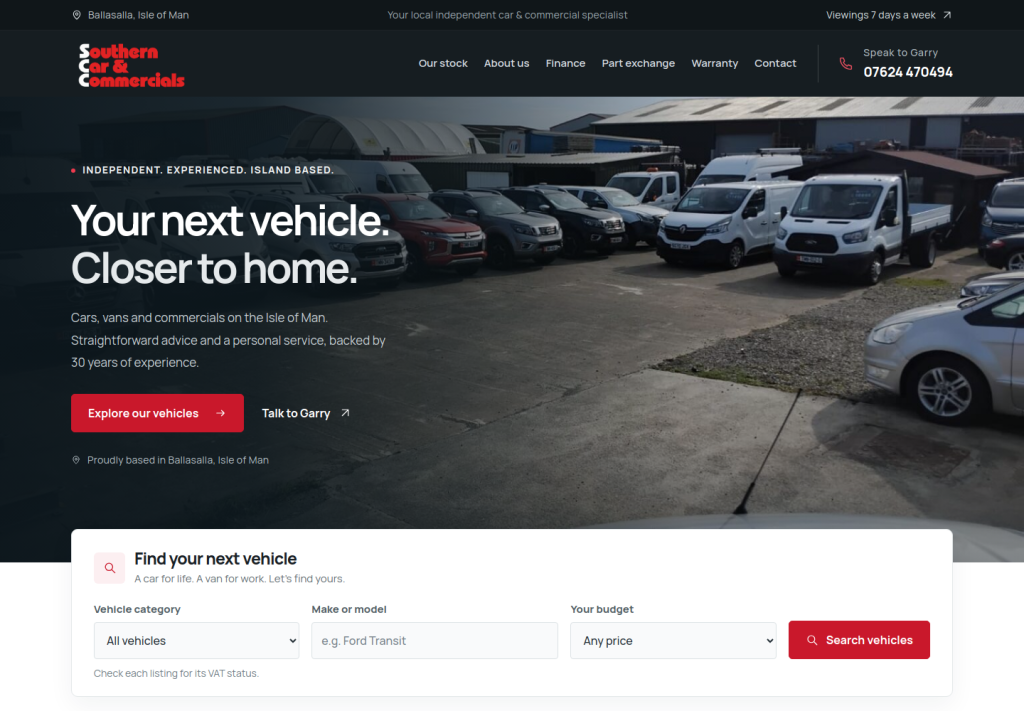
A website built for real customer decisions in Fordton
Businesses serving a community such as Fordton often work across several nearby places rather than within one boundary. Web Professionals builds and manages websites for businesses serving Fordton and the wider Devon area.
Good design needs to do more than make the company look polished. Service information, project evidence and calls to action need to work together rather than compete for attention. It also gives a Fordton business room to add stronger proof and service detail as the website develops.
A practical service area around Fordton
Fordton sits close to Crediton (about 0.2 miles away in a straight line, to the north-west), Copplestone (about 4.7 miles away in a straight line, to the north-west) and Thorverton (about 5.5 miles away in a straight line, to the east). Those nearby communities help give a practical picture of the wider area a local business may serve; the distances shown are approximate straight-line distances rather than driving times.
Nearby-place information is most useful when it helps customers understand where a business genuinely works. If customers genuinely come from Crediton, Copplestone, Thorverton and Exeter, those places can be connected through useful internal links and clear service information. Accuracy matters more than adding unsupported local claims.
Make phone enquiries as easy as desktop enquiries
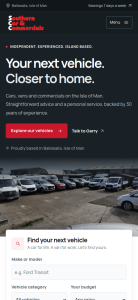
A mobile visitor may be comparing providers quickly and with less patience for awkward layouts. The page should preserve content priorities while adapting the presentation to the available screen. A Fordton business therefore benefits from a mobile journey that feels deliberate rather than secondary.
Give customers something specific to judge
Claims such as reliable, trusted or high quality are stronger when the website shows why they are credible. A consistent company identity, accurate contact information and visible process detail also help the business feel established. For customers around Fordton, real proof can bridge the gap between finding a business online and feeling confident enough to make contact.
Portfolio examples elsewhere on this website are genuine Web Professionals projects. They are shown as general evidence unless a project genuinely belongs to Fordton, so the page does not need fabricated local clients or testimonials.
Explain coverage clearly for customers around {$name}
Customers often want to know whether a company covers their area before spending time on the rest of the website. The local map and nearby-place information give customers a simple view of Fordton in relation to surrounding communities. That creates natural routes between relevant local pages while keeping the focus on customer needs.
Make important services easier to find and understand
A strong website gives future SEO work something useful to build on. Clear service pages, descriptive headings and sensible internal links can help visitors reach the information that matters to them. That gives customers around Fordton useful information now while leaving room for ongoing Local SEO or SEO Pro work later.
Businesses that want ongoing optimisation can also review Local SEO and SEO Pro. Those services build on the website rather than replacing the need for useful service content and genuine business proof.
Help visitors move from interest to the right next step
People often scan a business website before deciding whether to spend more time on it. The customer journey works best when each section has a reason to exist rather than simply filling vertical space. A Fordton business can use that journey to support calls, WhatsApp messages, quote forms or appointment requests according to how it actually sells.
Build the first version around the services that matter most
The strongest starting point is the knowledge already inside the business. Use existing photographs, reviews, credentials, service details and common enquiry questions wherever they add confidence. For a business around Fordton, that produces clearer and more convincing content than filling pages with generic marketing claims.