
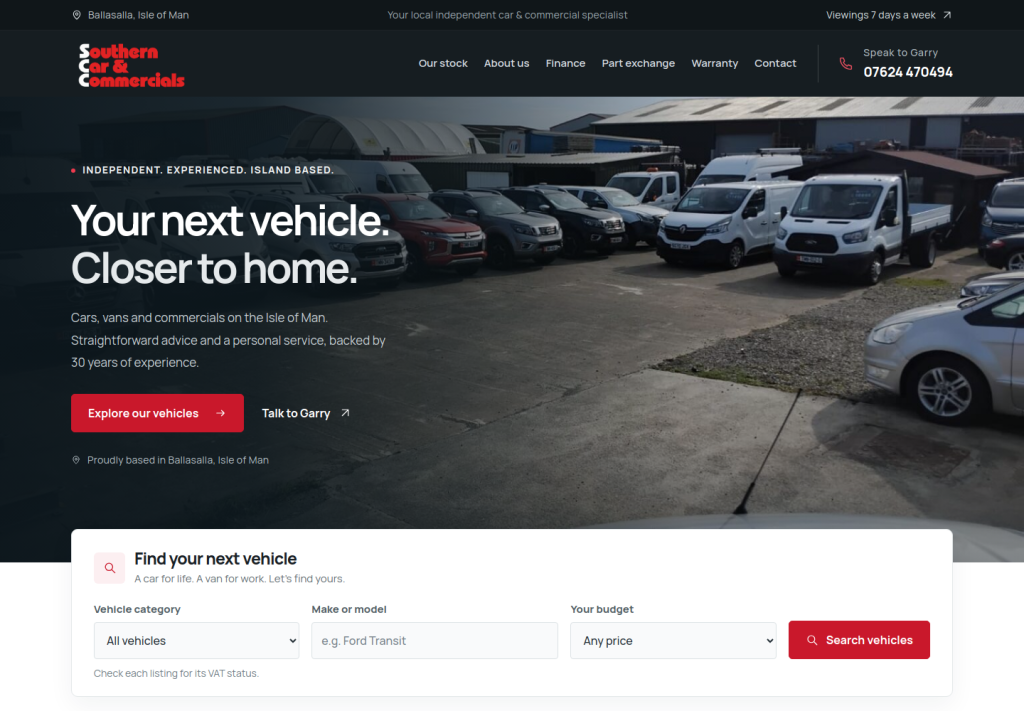
Give customers around Bridge useful reasons to make contact
People searching around Bridge need the same practical information as customers in a larger town: services, evidence, coverage and a clear route to contact. Web Professionals builds and manages websites for businesses serving Bridge and the wider Greater London area.
Good design needs to do more than make the company look polished. Service information, project evidence and calls to action need to work together rather than compete for attention. The result should feel like a real business website for customers around Bridge, with clear information that helps them decide what to do next.
A practical service area around Bridge
Bridge sits close to London (about 1.7 miles away in a straight line, to the west), Islington (about 2.0 miles away in a straight line, to the north) and City of Westminster (about 2.3 miles away in a straight line, to the west). Those nearby communities help give a practical picture of the wider area a local business may serve; the distances shown are approximate straight-line distances rather than driving times.
That context is useful when a real business serves more than one community. Mentioning London, Islington, City of Westminster and Peckham can help people understand the real area the business serves without implying separate offices. Web Professionals works with businesses across the UK from our Bolton base, so customers can get professional website support without needing a designer on the same street.
Use real evidence instead of broad claims
Professional presentation creates the first impression, but evidence gives customers something more concrete to assess. Evidence is most useful near the service or claim it supports instead of being hidden away on a single generic page. A business serving Bridge does not need to pretend every previous customer came from Bridge; genuine work is more valuable when it is presented honestly.
Portfolio examples elsewhere on this website are genuine Web Professionals projects. They are shown as general evidence unless a project genuinely belongs to Bridge, so the page does not need fabricated local clients or testimonials.
Show customers where the business genuinely works
Nearby places give useful context when a business regularly works across more than one community. The relationship between Bridge, London, Islington, City of Westminster and Peckham and Greater London can make coverage easier for customers to understand. The aim is to help customers understand whether the business is relevant to them before they make contact.
Prioritise useful information on smaller screens
Phone users need the same confidence-building information as desktop visitors, but the order and spacing matter more. Readable text, comfortable controls, stable layouts and obvious call or message options all contribute to a smoother experience. This matters whether the visitor discovered the business through Google, a recommendation or a shared link around Bridge.
Organise services around real buying questions
Service architecture should reflect the actual offer rather than an arbitrary page count. Separating genuinely different services gives each topic a clear destination while keeping the main navigation understandable. The result is a site that can explain the business properly to customers around Bridge without overloading the homepage.
- Clear next steps: Show what a customer should do after reading enough to decide the business may be suitable.
- Real proof: Use genuine projects, reviews, credentials or business evidence where they support a decision.
- Customer questions: Answer the practical questions that commonly delay an enquiry or quote request.
- Service clarity: Make the main services easy to distinguish and give each one enough useful detail.
For the wider offer, see the web design service, compare managed website packages and review real client projects.
Make future improvements easier to add
Good structure gives the business somewhere logical to put new content later. Content should be able to expand without turning navigation into an unplanned list of pages. The result is a site that can become more useful as the business learns which services, questions and areas matter most to customers.
Give the website a useful starting point and room to improve
The strongest starting point is the knowledge already inside the business. Use existing photographs, reviews, credentials, service details and common enquiry questions wherever they add confidence. For a business around Bridge, that produces clearer and more convincing content than filling pages with generic marketing claims.