
Give customers around Folly useful reasons to make contact
Smaller local areas such as Folly can still produce valuable enquiries when the website explains what the business does and where it genuinely works. Web Professionals builds and manages websites for businesses serving Folly and the wider Gateshead area.
The website should answer the questions that normally sit between discovery and an enquiry. The content should reflect quote requests, appointments, consultations or direct enquiries rather than force every company into one formula. Around Folly, this gives customers a practical way to understand the business before they call or message.
Serving customers across Folly and the surrounding area
Folly sits close to Blaydon-on-Tyne (about 2.4 miles away in a straight line, to the east), Newburn (about 2.5 miles away in a straight line, to the north-east) and Wylam (about 2.5 miles away in a straight line, to the north-west). Those nearby communities help give a practical picture of the wider area a local business may serve; the distances shown are approximate straight-line distances rather than driving times.
A service-area website works best when coverage follows the way the business actually operates. The relationship between Folly, Blaydon-on-Tyne, Newburn, Wylam and Rowlands Gill and Gateshead can be explained simply so customers know whether the business is relevant to them. That keeps the local context accurate while still making the service area easy to understand.
Design for the moment somebody searches on a phone
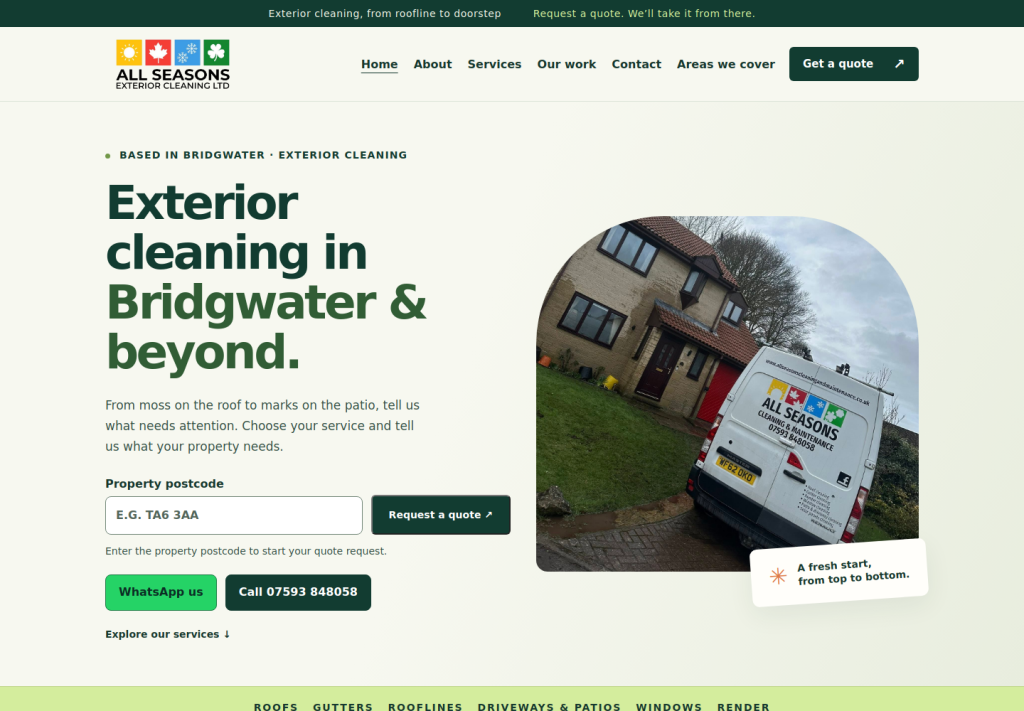
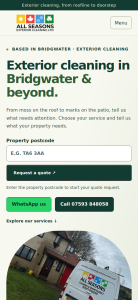
A mobile visitor may be comparing providers quickly and with less patience for awkward layouts. The page should preserve content priorities while adapting the presentation to the available screen. A Folly business therefore benefits from a mobile journey that feels deliberate rather than secondary.
Make the wider service area easy to understand
Coverage information is most useful when it reflects where the business genuinely works. Businesses serving Folly may also work across Blaydon-on-Tyne, Newburn, Wylam and Rowlands Gill, depending on the services they provide and how far they normally travel. The website should only name areas the business genuinely serves, keeping the information accurate and useful.
Make credibility visible throughout the website
The most persuasive trust signals are usually specific rather than decorative. Project examples can show the kind of work delivered, while testimonials and credentials can answer different trust questions. Genuine Web Professionals projects can demonstrate the standard of work without pretending those clients are based in Folly.
Portfolio examples elsewhere on this website are genuine Web Professionals projects. They are shown as general evidence unless a project genuinely belongs to Folly, so the page does not need fabricated local clients or testimonials.
Reduce friction before somebody contacts the business
The first useful task is often confirming that the business offers the right service. Clear headings and purposeful calls to action let people move quickly while still leaving detailed information for those who want it. That gives visitors around Folly enough information to make progress without forcing them through unnecessary pages.
Make the website useful before adding ongoing SEO
Better visibility starts with accurate information about what the business offers and where it genuinely works. Strong service information, genuine proof and clear contact routes give potential customers something useful to act on. Customers around Folly get clearer information now, while the business can add Local SEO or SEO Pro later if it wants ongoing optimisation.
Businesses that want ongoing optimisation can also review Local SEO and SEO Pro. Those services build on the website rather than replacing the need for useful service content and genuine business proof.
Turn the business knowledge you already have into clearer web content
There is no benefit in inventing extra pages before the core customer journey is clear. Gather the services that generate work, the questions prospects ask, the proof available and the places the business genuinely serves. That gives the Folly section a clear role within the wider website and a useful purpose for customers who want to understand the service and coverage.